
Capital Improvements vs Repairs: 15 South Florida Examples
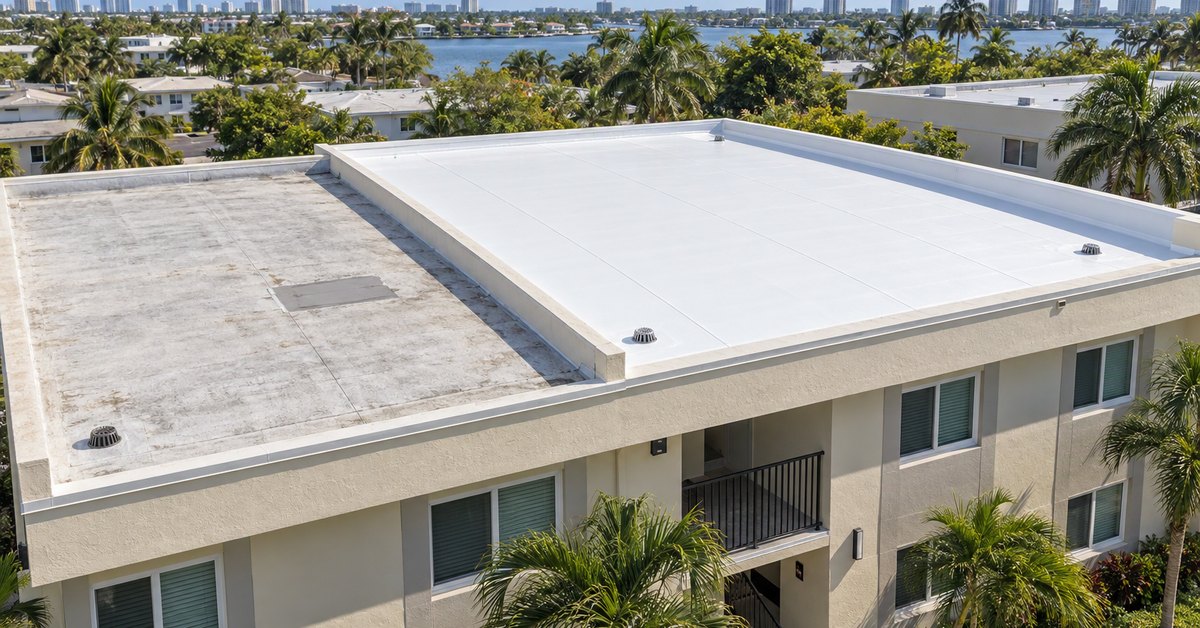
From an operational property-management perspective, a limited repair generally keeps a building functioning, while a larger replacement or upgrade may need separate project tracking and professional review. The final legal, tax, and accounting treatment depends on the owner’s facts and must be determined by the owner’s qualified advisers.
Important: This article provides general property-management and recordkeeping information only. MAGASI Management does not provide legal, tax, accounting, insurance, or investment advice. Owners should consult their CPA, tax adviser, attorney, insurance professional, or other qualified adviser as appropriate before making classification, reporting, compliance, or financial decisions.
For the underlying distinction, read our companion article, Maintenance and Repair vs. Capital Improvement: Why the Distinction Matters More Than You Think. Here, we stay with worked examples from rental buildings in Miami-Dade, Broward and Palm Beach counties.
Key takeaways
- Scope drives the operational record. A roof patch and full roof replacement may address the same leak but should be documented as different scopes for professional review.
- MAGASI can organize work orders, project records, and owner reports; the owner’s qualified advisers determine legal, tax, and accounting treatment.
- Mixed scopes should be separated in proposals, work orders, invoices, and project reports before adviser review.
Capital improvement and major capital improvement: stand-alone definitions
Capital improvement: For project-tracking purposes, this generally describes work that betters, restores, or adapts a building or system. This operational description does not determine capitalization, deductibility, depreciation, financial-statement presentation, or other legal or tax treatment; the owner’s qualified advisers must make those determinations.
Major capital improvement: Operationally, this describes a substantial project affecting a significant component or system, such as a full roof, re-pipe, elevator modernization, impact windows, or generator. It is not presented here as a universal legal, tax, or accounting category.
Capital improvements vs repairs: 15 South Florida building examples
These examples are screening and documentation guides only. They do not classify any expenditure for tax, accounting, legal, insurance, lending, reserve, or regulatory purposes. Final treatment requires review of the owner’s facts, governing documents, accounting policies, and applicable rules by qualified advisers.
For capital improvements vs repairs and maintenance, do not rely on labels such as “capital repairs.” In every capital improvement vs repair decision, document the actual scope. That same scope controls the analysis of repairs versus capital improvements.
| The work | Operational screening only | Why |
|---|---|---|
| 1. Flat-roof leak patch vs. full roof replacement | Patch: generally repair-oriented. Full replacement: generally improvement-oriented. | A localized patch maintains the existing roof; full replacement addresses the broader roof system. |
| 2. HVAC capacitor, motor or coil vs. full split system | Component work: generally repair-oriented. Full system: generally improvement-oriented. | Replacing a limited component maintains operation; replacing the full system addresses the complete HVAC asset. |
| 3. Water heater service vs. water heater replacement | Service: generally repair-oriented. Replacement: generally improvement-oriented. | Servicing restores operation; replacement installs a new complete unit. |
| 4. Parking-lot potholes vs. full milling and repaving | Pothole work: generally repair-oriented. Full repaving: generally improvement-oriented. | Spot repairs maintain limited areas; milling and repaving renew the larger parking surface. |
| 5. Exterior touch-up painting vs. full envelope coating | Touch-up: generally repair-oriented. Full coating: generally improvement-oriented. | Touch-up addresses isolated wear; a full coating treats the broader building envelope. |
| 6. Broken window vs. impact-window installation | Single-window repair: generally repair-oriented. Impact-window program: generally improvement-oriented. | Replacing damaged glass restores a limited opening; impact-window installation upgrades multiple building components. |
| 7. Elevator callback vs. elevator modernization | Callback service: generally repair-oriented. Modernization: generally improvement-oriented. | A callback corrects an operating issue; modernization replaces or upgrades major elevator components. |
| 8. Building recertification repair package | Review and separate each scope. | A recertification package may combine routine repairs, replacements and major upgrades that require separate documentation. |
| 9. Drain clearing vs. plumbing re-pipe | Drain clearing: generally repair-oriented. Re-pipe: generally improvement-oriented. | Clearing or repairing a short section maintains the system; a building-wide re-pipe replaces a major plumbing component. |
| 10. Appliance repair vs. appliance replacement | Repair: generally repair-oriented. Replacement: review based on scope and owner policy. | Repairing a component maintains the appliance; replacement installs a new asset and may require separate tracking. |
| 11. Flooring patch vs. unit-wide flooring replacement | Patch: generally repair-oriented. Unit-wide replacement: generally improvement-oriented. | A patch addresses localized damage; unit-wide replacement renews the full flooring scope. |
| 12. Seawall crack repair vs. substantial seawall reconstruction | Crack repair: generally repair-oriented. Reconstruction: generally improvement-oriented. | Localized crack work maintains the structure; substantial reconstruction replaces or restores a major component. |
| 13. Lamp replacement vs. LED lighting retrofit | Lamp replacement: generally repair-oriented. LED retrofit: generally improvement-oriented. | Replacing lamps maintains existing fixtures; a retrofit upgrades the broader lighting system. |
| 14. Pool leak repair vs. pool resurfacing | Leak repair: generally repair-oriented. Resurfacing: generally improvement-oriented. | A localized leak repair restores function; resurfacing renews a major pool finish across the full area. |
| 15. Portable backup equipment vs. permanent generator installation | Portable equipment: generally operating equipment. Permanent installation: generally improvement-oriented. | A permanent generator adds an integrated building system with electrical, permitting and installation scope. |
The IRS tests in plain English
Owners and their tax advisers may consult the IRS tangible property final regulations, which describe concepts including betterment, adaptation, and restoration. MAGASI does not interpret or apply these rules for an owner.
Betterment
Discussion point for the owner’s tax adviser: whether the work corrects a pre-acquisition condition, materially increases capacity, strength, quality, or productivity, or adds a material component.
Adaptation
Discussion point for the owner’s tax adviser: whether the property is being adapted to a new or different use under applicable rules.
Restoration
Discussion point for the owner’s tax adviser: whether the project replaces a major component, returns property from disrepair to efficient operation, rebuilds it, or addresses damage subject to special treatment.
Safe-harbor topics to discuss with the owner’s CPA
- De minimis safe harbor: May allow qualifying per-invoice or per-item costs to be expensed.
- Safe harbor for small taxpayers: May cover qualifying building costs when taxpayer, building, and annual-cost tests are met.
- Routine maintenance safe harbor: May cover recurring work expected to keep property ordinarily efficient.
- Book-conformity election: May permit capitalization of repair costs also capitalized in the books.
For residential rental context, review IRS Publication 527, Residential Rental Property, then have the owner’s CPA apply the current rules.
How operational tracking affects budgets, reserves, and owner reports
For internal property-management reporting, routine work orders and larger approved projects can be tracked separately so owners and advisers can review them clearly. MAGASI does not determine balance-sheet presentation, reserve eligibility, capitalization, deductibility, or funding compliance.
In our multifamily property management work, we separate routine work orders from approved capital projects so owners can read the operating story clearly.
How a property manager should organize and document the work
- Open a separate work order stating the condition, location, date, and reason for the work.
- Define scope before coding. Separate repair, replacement, upgrades, engineering, permits, and closeout.
- Use the owner-approved chart of accounts and a provisional project category. Do not represent the coding as final tax or accounting treatment; route uncertain items to the owner and CPA.
- For capital review, retain completion date, final inspection, warranty start, and asset location.
- Show routine work orders and larger approved projects separately in operational reports, subject to the owner’s reporting policies and adviser review.
- Route large, bundled, casualty-related, acquisition-period, or conversion projects to the owner and qualified advisers before the reporting period closes.
Multi-vendor projects may benefit from development and project management controls. Apply the same documentation discipline to commercial property management accounts.
Frequently asked questions
Is a full roof replacement always a capital improvement?
A full roof replacement is commonly tracked as a major project because of its scope. MAGASI does not determine whether it must be capitalized, deducted, depreciated, or treated under casualty rules. Retain the proposal, photos, permit, and completion record for the owner’s CPA.
Can an emergency repair still be capitalized?
Urgency does not establish tax or accounting treatment. Record temporary stabilization separately from permanent work and send the documentation to the owner’s qualified advisers.
Does paying from reserves make the project a capital improvement?
Not necessarily. Funding sources and classification are separate matters. The owner and qualified advisers should review governing documents, lender or program restrictions, and tax and accounting treatment.
Should building recertification repairs be one capital project?
Not automatically. A property manager can use one project umbrella for control while preserving line-item scopes and invoices. The applicable building official, owner, attorney, and CPA should determine regulatory, legal, and financial treatment.
Talk with MAGASI about the operating side
MAGASI Management is a full-service property management company headquartered in Coconut Grove, Miami, serving Miami-Dade, Broward and Palm Beach counties. If you want stronger work-order records, capital-project tracking and owner reporting for a South Florida rental building, schedule a meeting with MAGASI.